
Cyprus has become one of the most attractive property destinations in the Mediterranean for international buyers. For some, the appeal is lifestyle: sunshine, safety, beaches, international schools, and a slower pace of life. For others, it is investment-led: a stable EU jurisdiction, strong demand in key cities, and a property market that continues to attract foreign interest.
Buying property in Cyprus as a foreigner is possible, but it is important to understand the process before making a decision. This guide aims to explain the key steps, costs, legal checks, mortgage considerations, and residency-related points that international buyers should know before purchasing property in Cyprus.
Our guide is written as a practical starting point, not as legal or tax advice. Requirements can change, so buyers should always confirm details with an independent lawyer, tax advisor, or qualified professional before committing.
Can foreigners buy property in Cyprus?
Yes, foreigners can buy property in Cyprus.
The process depends partly on whether the buyer is an EU citizen or a non-EU citizen. EU citizens generally have fewer restrictions, while non-EU buyers are typically required to obtain permission to acquire immovable property in Cyprus. This requirement is set out under the Acquisition of Immovable Property (Aliens) Law, and official Cyprus government guidance states that foreign nationals from non-EU member states wishing to acquire immovable property must obtain permission from the local District Administration.
For most buyers, this is handled as part of the legal process with the support of a Cyprus-based lawyer. It should not be treated as an afterthought. If you are a non-EU buyer, including a UK citizen after Brexit, your lawyer should explain what approvals are needed, when to apply, and how this affects completion.
The key point is simple: foreign buyers can purchase property in Cyprus, but the right legal guidance is essential.
Why Cyprus attracts international property buyers
Cyprus offers a rare combination of lifestyle, accessibility, and investment appeal.
It is an EU member state with a legal system familiar to many international buyers, especially those from common law backgrounds. English is widely used in business, legal, and real estate transactions, which makes the buying process easier for many foreign investors.
The island also offers a strong lifestyle case. Buyers are drawn to the Mediterranean climate, coastal living, international communities, and access to both Europe and the Middle East. For families, Cyprus offers private schools, healthcare options, and a safe environment. For professionals and business owners, cities such as Limassol provide a growing commercial base.
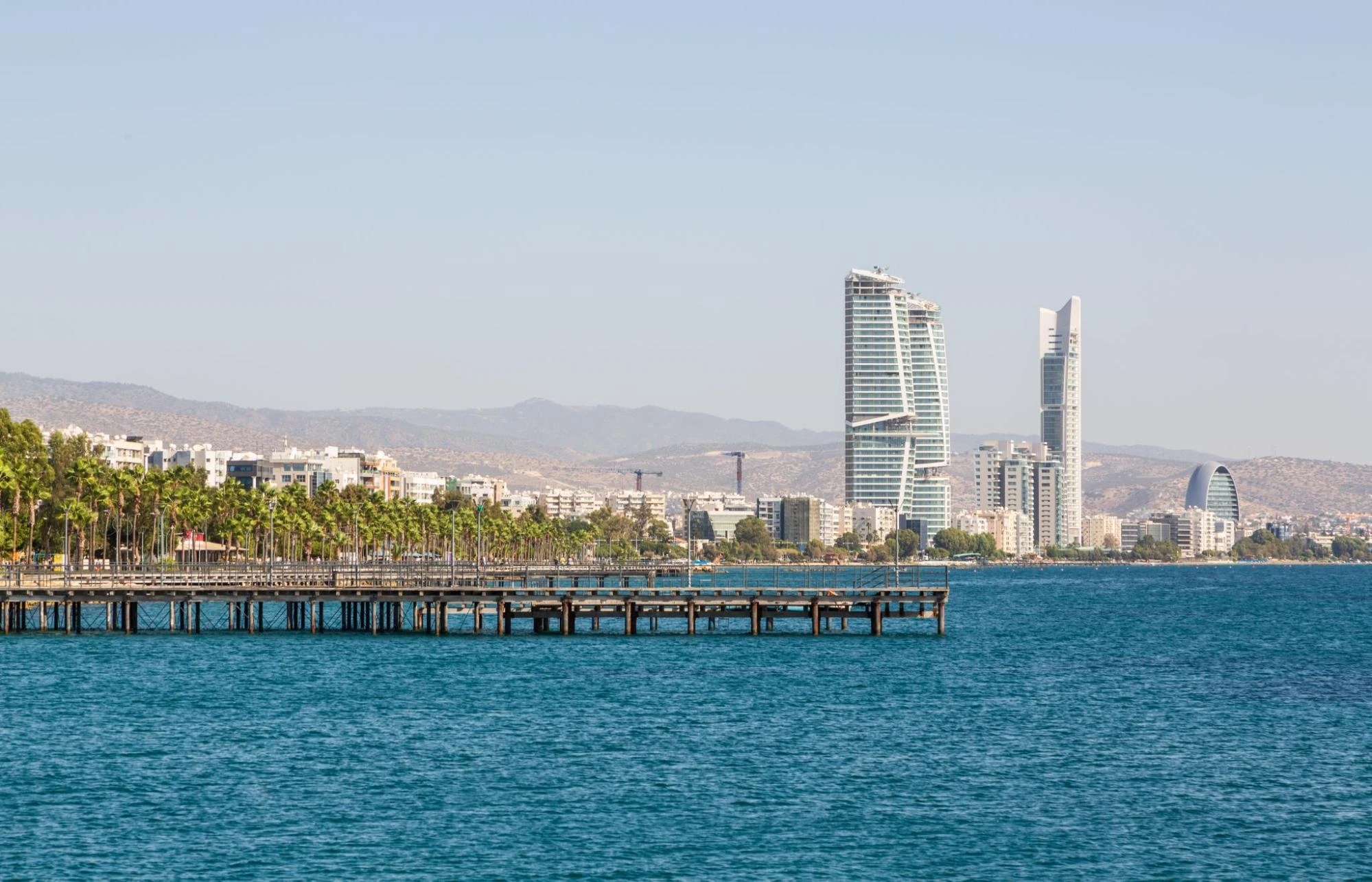
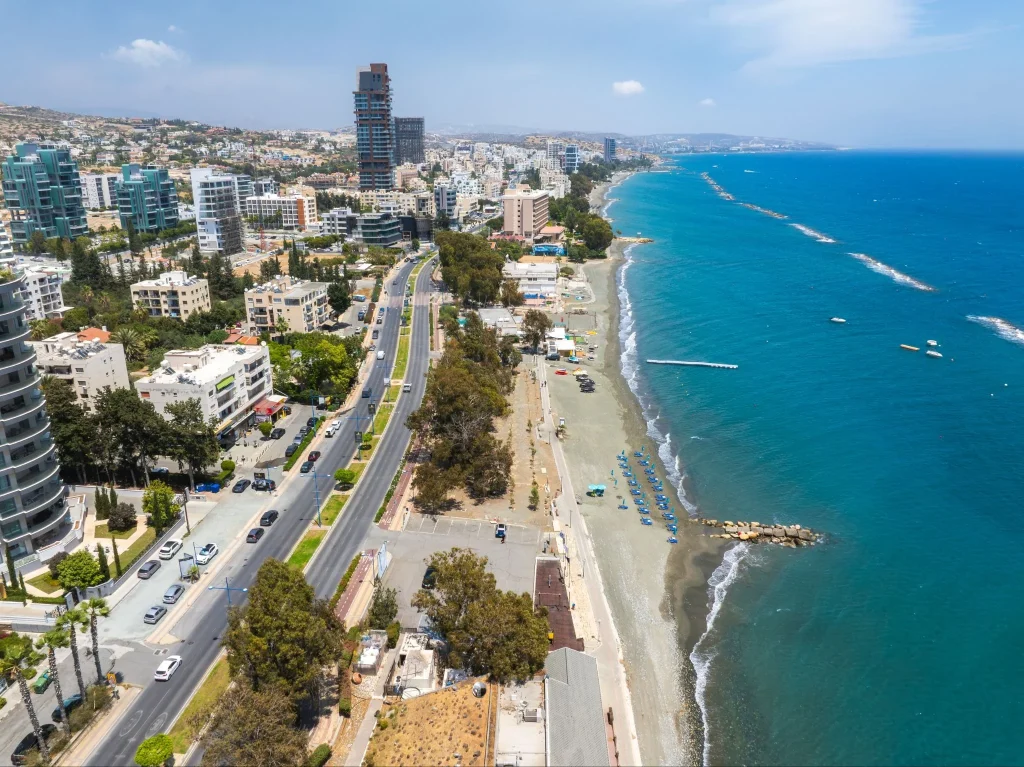
Limassol, in particular, continues to attract strong international interest because it combines business infrastructure, premium residential areas, a developed coastline, and year-round lifestyle appeal. For this reason, many international buyers begin their search in Limassol before comparing other areas of Cyprus.
Step by step: The property buying process in Cyprus
The process is relatively straightforward when handled correctly. Below is a typical structure for buying property in Cyprus as a foreigner.
1. Define your purpose and budget
Before viewing properties, clarify why you are buying.
Are you looking for:
- A primary residence?
- A holiday home?
- A rental investment?
- A future retirement base?
- A property linked to residency planning?
- A long-term capital preservation asset?
Your purpose will influence the location, property type, budget, and legal considerations. A villa in a quiet hillside area may suit a family or long-term owner-occupier, while a coastal apartment may suit a rental-focused investor.
Your budget should also include purchase-related costs, not just the property price.
2. Choose the right location
Location is one of the most important factors in any Cyprus property purchase.
In Limassol, different areas serve different buyer profiles. Mouttagiaka offers hillside privacy with access to the city, coastline, and highway. Agios Tychonas is known for its coastal prestige and five-star hotel corridor. The tourist area offers walkability and rental appeal. Agia Fyla provides elevated residential living, while suburban areas such as Moni offer space and value.
For international buyers, the best location is not always the most famous one. It is the one that matches the intended use of the property.
3. Select the property and developer
Once you know your purpose and preferred location, evaluate the property itself.
For new-build properties, consider:
- Developer track record
- Construction quality
- Energy efficiency
- Delivery timeline
- Payment schedule
- Specifications and finishes
- Title deed process
- Long-term maintenance profile
For resale properties, review the condition of the property, title deed status, renovation needs, and any existing encumbrances.
This is where a trusted developer can make a major difference. Well-documented specifications, clear timelines, and transparent communication reduce uncertainty for foreign buyers.
4. Appoint an independent lawyer
This is one of the most important steps.
Your lawyer should be independent from the seller, developer, or agent. Their role is to protect your interests, review the legal position of the property, explain the contract, and guide you through the required approvals.
A lawyer can also assist if you are buying remotely through a power of attorney.
5. Reserve the property
If you decide to proceed, the next step is usually a reservation agreement and reservation deposit.
This temporarily removes the property from the market while legal checks begin. Before paying, make sure you understand:
- Whether the deposit is refundable
- How long the reservation period lasts
- What happens if legal checks raise concerns
- When the sale agreement must be signed
Do not treat a reservation as a casual step. It should be reviewed carefully.
6. Complete legal due diligence
Your lawyer should check the legal and planning status of the property.
Depending on whether the property is new-build, off-plan, or resale, this may include:
- Ownership and title status
- Planning and building permits
- Existing mortgages or encumbrances
- Developer obligations
- VAT status
- Contract terms
- Delivery date
- Communal charges
- Rights and restrictions
This step is especially important for foreign buyers who are not familiar with the Cyprus property system.
7. Sign the sale agreement
Once due diligence is complete, the buyer and seller sign the sale agreement.
The contract should clearly set out the purchase price, payment schedule, completion terms, delivery obligations, included specifications, and any penalties or protections relating to delays.
In Cyprus, the contract of sale is typically deposited with the Department of Lands and Surveys. This gives the buyer important legal protection and helps secure their rights under the agreement. The Department of Lands and Surveys also provides official services and tools connected to property transfers and transfer fee calculations.
8. Apply for permissions if required
If you are a non-EU buyer, permission to acquire immovable property may be required.
Official Department of Lands and Surveys guidance notes that, for transfers involving a foreign person as defined under the Immovable Property Acquisition (Aliens) Law, a permit from the competent authority may be required.
Your lawyer should advise whether this applies to you and handle the application process.
9. Complete the purchase and take handover
The final stage usually involves payment of the remaining purchase price, completion documents, utility arrangements, and handover.
For completed properties, the handover may be immediate once formalities are completed. For off-plan or under-construction properties, completion follows the agreed construction and payment schedule.
For new developments, buyers should also understand when separate title deeds are expected and what documentation is provided at delivery.

Taxes and costs when buying property in Cyprus
Foreign buyers should calculate the full cost of purchase before committing.
The main costs may include:
- Purchase price
- VAT, if applicable
- Reduced VAT, if eligible
- Transfer fees
- Stamp duty
- Legal fees
- Bank and mortgage fees, if financing
- Valuation fees
- Insurance
- Utility connection costs
- Communal charges
- Maintenance or property management costs
VAT on new properties
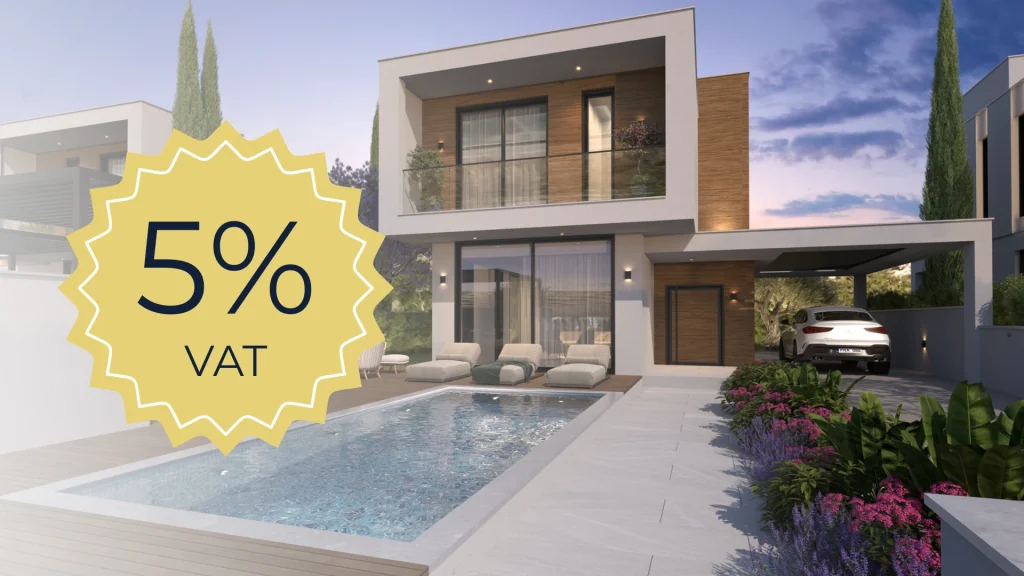
New properties in Cyprus are usually subject to VAT. In some cases, eligible buyers may apply for a reduced VAT rate of 5% for the purchase or construction of a primary residence. The Cyprus Tax For All portal provides official guidance on applying for the Reduced Rate VAT 5% Certificate for the purchase or construction of a primary residence.
The reduced VAT rate is not automatic. Eligibility depends on specific criteria, and buyers should confirm their position before signing. The Tax For All portal also provides a VAT calculation tool for the purchase or building of a house, which can help buyers understand how the reduced VAT may apply based on residence size.
Transfer fees and stamp duty
Transfer fees are payable when the property is transferred into the buyer’s name. The Department of Lands and Surveys provides an official transfer fee calculator, which can be used to estimate potential transfer fees based on the declared transfer amount.
Stamp duty is also usually payable on the sale agreement. Your lawyer should calculate this for you as part of the transaction.
The most important advice is to ask for a full acquisition cost estimate before committing. This gives you a clearer view of the real investment amount, not just the advertised property price.

Can foreigners get a mortgage in Cyprus?
Foreign buyers may be able to obtain a mortgage from a Cyprus bank, but approval depends on the buyer’s personal circumstances and the bank’s lending criteria.
Banks may consider:
- Nationality and residency status
- Income source
- Employment or business background
- Existing debt
- Deposit amount
- Property type
- Property valuation
- Currency of income
- Age and repayment term
Non-resident buyers may face stricter requirements or need a larger deposit. Documentation often includes identification, proof of income, tax records, bank statements, and details of the property.
If you intend to finance the purchase, it is wise to speak with banks or mortgage advisors early. Do not reserve a property assuming finance will be approved automatically.
Can property investment help you obtain residency in Cyprus?
Property investment may support certain residency routes in Cyprus, especially for non-EU buyers.
Cyprus has an immigration permit framework for third-country nationals who invest in Cyprus, and official Migration Department guidance outlines criteria for granting an immigration permit under an expedited procedure to qualifying investors.
However, property purchase and residency approval are separate matters. Buying a property does not automatically guarantee residency. Requirements may include investment thresholds, income criteria, documentation, family details, and background checks.
If residency is part of your buying strategy, speak with a qualified immigration lawyer before choosing a property. This ensures the purchase aligns with the relevant criteria from the beginning.
New-build or resale property: which is better for foreign buyers?
Both new-build and resale properties can be good investments, but they serve different needs.
New-build properties may offer:
- Modern layouts
- Better energy efficiency
- Lower immediate maintenance
- Contemporary materials and systems
- Developer warranties or guarantees
- Smart home and climate control options
- Potential reduced VAT eligibility, where applicable
- A clearer fit for modern rental or owner-occupier demand
Resale properties may offer:
- Established neighbourhoods
- Immediate occupation
- Existing title deeds in some cases
- Potential renovation upside
- More room for negotiation in certain markets
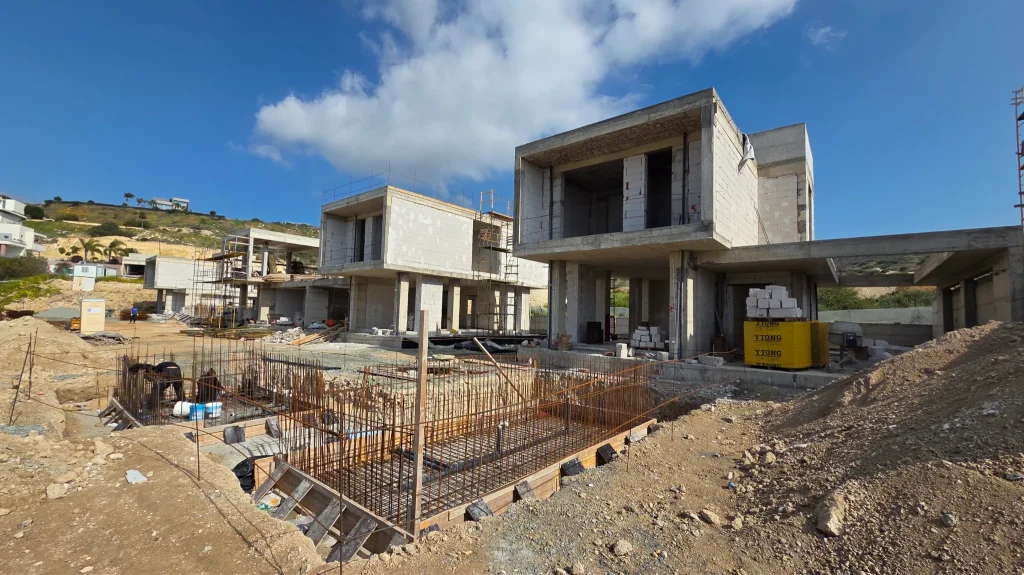
For many international buyers, new-build properties are attractive because they reduce some of the uncertainty around maintenance and modern living standards. Energy efficiency is becoming more important, especially for buyers comparing running costs, comfort, and long-term resale value.
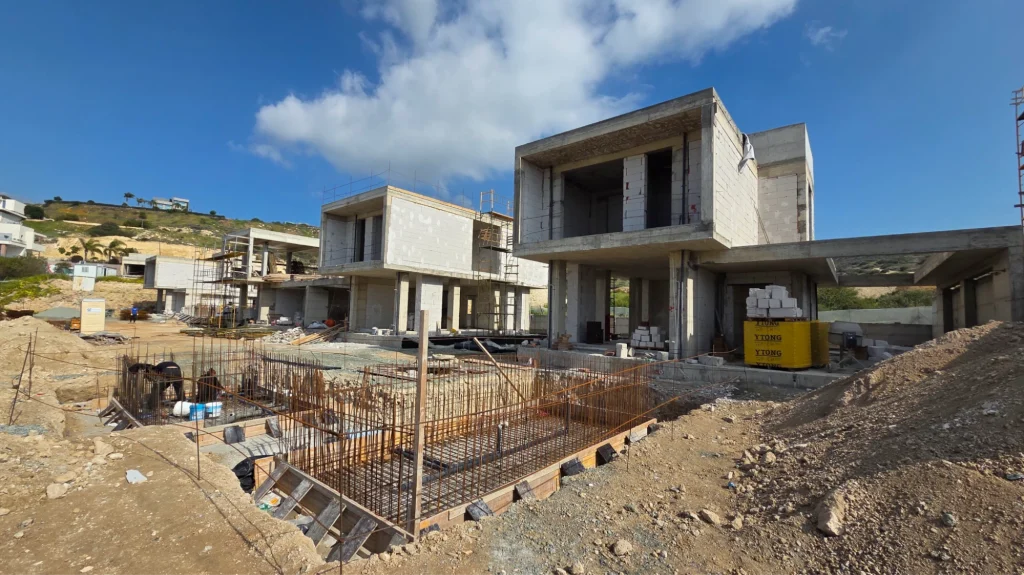
This is one reason projects such as DiARTE HILLS in Mouttagiaka appeal to buyers looking beyond location alone. Its Energy Class A rating, private hillside setting, photovoltaic panels, climate systems, and limited villa collection reflect the type of specification many foreign buyers now expect from premium property in Limassol.
Due diligence checklist before buying property in Cyprus
Before signing, foreign buyers should make sure the following points have been reviewed.
Legal checks
- Who legally owns the property?
- Are there title deeds or a clear title deed process?
- Are there any mortgages, charges, or encumbrances?
- Are planning and building permits in place?
- Is the seller legally entitled to sell?
Financial checks
- Is VAT applicable?
- Could reduced VAT apply?
- What are the transfer fees and stamp duty?
- What are the legal fees?
- Are there communal charges?
- What maintenance costs should be expected?
Property checks
- What exactly is included in the specification?
- What appliances, finishes, and systems are included?
- What is the delivery date?
- What happens if there are delays?
- Is there a defects liability period?
- What warranties apply?
Investment checks
- Is the location suitable for year-round demand?
- Is the property easy to rent or resell?
- Does it suit the target tenant or buyer profile?
- Are running costs reasonable?
- Is the area developing positively?
Good due diligence should not be seen as a barrier. It is what allows buyers to proceed with confidence.
Can you buy property in Cyprus remotely?
Yes, many international buyers begin or complete the process remotely.
A lawyer in Cyprus can often represent the buyer through a power of attorney, allowing them to carry out legal checks, sign documents, and handle parts of the process on the buyer’s behalf.
Remote buying may involve:
- Video consultations
- Virtual viewings
- Digital document sharing
- Remote contract review
- Bank transfers from abroad
- Power of attorney arrangements
That said, visiting Cyprus before making a final decision is still recommended where possible. Location, views, access, noise levels, and neighbourhood feel are difficult to judge fully online.
For high-value purchases, a short visit can provide clarity and reduce risk.
Why many foreign buyers focus on Limassol
Limassol is one of Cyprus’ strongest property markets because it brings together several important factors.
It has a strong business base, an international community, a developed coastline, premium restaurants and hotels, private schools, marinas, and access to major transport routes. It also offers a range of residential settings, from seafront apartments to hillside villas and suburban family homes.
For foreign investors, Limassol is attractive because demand is not purely seasonal. It is a working city, a lifestyle destination, and a business hub. This supports year-round residential appeal.
Within Limassol, Mouttagiaka is particularly relevant for buyers seeking a quieter residential environment while staying close to the city, coast, and highway. DiARTE Hills reflects this location strategy: private hillside villas in a limited collection, designed for buyers who value space, privacy, and long-term desirability.

Common mistakes foreign buyers should avoid
Buying property in Cyprus can be straightforward, but mistakes usually happen when buyers move too quickly or focus on the wrong details.
1. Looking only at price per square metre
Price matters, but it is not the full story. Location, build quality, energy efficiency, layout, parking, outdoor space, and long-term demand can matter more.
2. Not calculating total purchase costs
VAT, legal fees, transfer fees, stamp duty, and maintenance costs should be included from the start.
3. Assuming reduced VAT applies automatically
The 5% VAT rate is subject to eligibility and application. It should be confirmed before purchase, not after.
4. Not appointing an independent lawyer
A buyer’s lawyer should represent the buyer only. This is essential for proper due diligence.
5. Ignoring location fundamentals
A beautiful property in the wrong location may underperform. Consider access, amenities, neighbourhood quality, and future demand.
6. Overlooking running costs
Energy efficiency, insulation, climate systems, and maintenance requirements affect long-term ownership costs.
7. Buying for residency without legal advice
Residency rules are separate from the property transaction. Buyers should confirm criteria with a qualified advisor.
8. Treating a holiday preference as an investment strategy
A location that feels attractive during summer may not always have the strongest year-round demand. Think about how the property performs across all seasons.
Buyer checklist before committing
Before moving ahead, ask yourself:
- Have I defined my reason for buying?
- Have I selected the right location for that purpose?
- Have I calculated taxes and purchase costs?
- Have I appointed an independent lawyer?
- Have I confirmed whether VAT applies?
- Have I checked title, permits, and encumbrances?
- Have I reviewed the payment schedule?
- Have I confirmed mortgage options, if needed?
- Have I taken legal advice if residency is part of the plan?
- Have I reviewed the developer’s track record and specification?
If you can answer these questions clearly, you are in a stronger position to make a confident decision.
Final thoughts: buying property in Cyprus with confidence
Buying property in Cyprus as a foreigner is achievable, but the best decisions are made with preparation.
The key is to understand the process, work with independent professionals, choose the right location, and evaluate the property beyond its surface appeal. For international buyers, this means thinking about legal security, long-term usability, energy efficiency, lifestyle value, and resale demand.
Cyprus offers a strong combination of Mediterranean living and investment potential. Limassol, in particular, remains a leading choice for buyers who want access to both lifestyle and business infrastructure.
BCL PRO develops residential projects in carefully selected areas of Limassol, with a focus on quality, location, and long-term value. If you are considering buying property in Cyprus, our team can help you explore available opportunities, including DiARTE Hills – a limited collection of Energy Class A villas in Mouttagiaka designed for privacy, comfort, and enduring appeal.