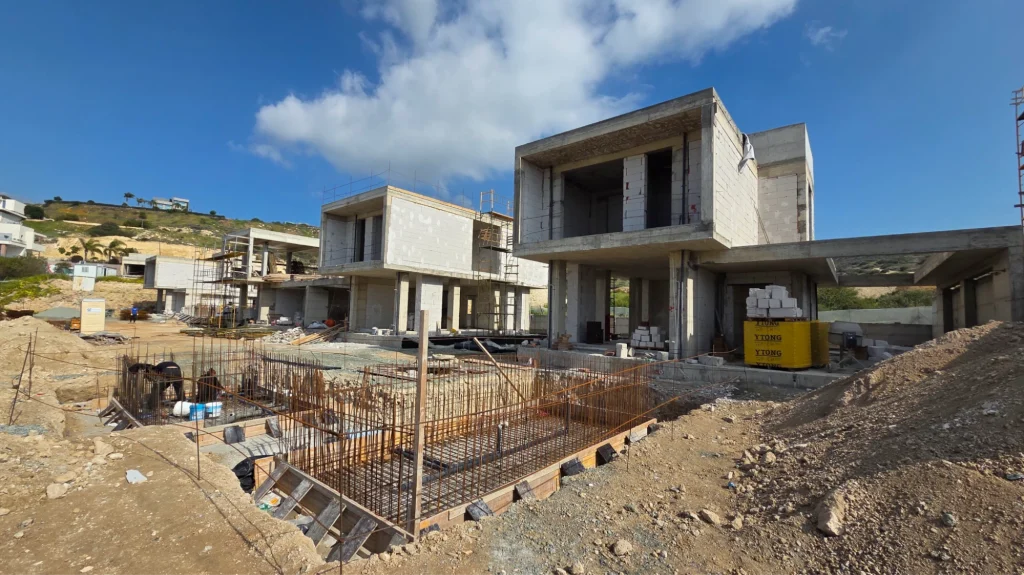


VAT can make a significant difference to the total cost of buying a new property in Cyprus. Many international buyers hear about the reduced 5% VAT rate, but it is important to understand that this rate does not apply automatically to every purchase.
In most cases, the reduced rate is linked to the purchase or construction of a property that will be used as the buyer’s primary residence. For buyers looking at new-build homes in Cyprus, this can be a major financial consideration — especially as transitional rules and deadlines may affect eligibility.
This article is for general information only and should not be treated as legal or tax advice. Buyers should confirm their position with a qualified Cyprus lawyer or tax advisor before making a decision.

What is VAT on property in Cyprus?
VAT is usually relevant when buying a new property in Cyprus. The standard VAT rate in Cyprus is 19%, according to the Cyprus Tax Department.
However, Cyprus also provides a reduced 5% VAT rate in specific circumstances, mainly for qualifying buyers purchasing or constructing a property to use as their primary and permanent residence. The official Tax For All portal provides guidance on applying for the Reduced Rate VAT 5% Certificate for the purchase or construction of a primary residence.
This means buyers should not simply look at the advertised property price. The VAT treatment can materially affect the final cost.
When can the 5% reduced VAT rate apply?
The reduced 5% VAT rate is generally connected to the buyer’s intended use of the property as a primary residence, rather than as a pure investment, rental property, or holiday home.
International buyers may be able to apply, provided they meet the relevant criteria. The key point is that eligibility depends on the buyer, the property, the intended use, and the applicable rules at the time of purchase.
In practice, buyers should confirm:
- Whether the property is new-build or resale
- Whether VAT applies to the transaction
- Whether the property will be used as a primary residence
- Whether the buyer qualifies for the reduced rate
- Whether the property falls within the relevant size and value limits
- Whether the application must be submitted before completion
The 5% rate should be treated as something to verify early, not something to assume later.

Why the deadline matters
Cyprus introduced changes to the reduced VAT framework for residential property, including stricter criteria around the application of the 5% rate. Transitional provisions have therefore become especially important for buyers considering new-build properties.
Recent legal and property market updates report that the transitional period for older 5% VAT rules has been extended to 31 December 2026. This means eligible buyers may still be able to benefit from the more favourable transitional framework until the end of 2026, subject to the relevant conditions.
For buyers, the practical message is simple: timing matters.
If a property qualifies and the buyer is eligible, completing the correct steps within the relevant timeframe can make a meaningful difference to the total purchase cost. If the reduced rate does not apply, the standard 19% VAT rate may be payable instead.
How 5% vs 19% VAT affects the purchase cost
The difference between 5% and 19% VAT can be substantial.
For example, on a property priced at €1,050,000 + VAT:
- At 5% VAT, VAT would be €52,500
- At 19% VAT, VAT would be €199,500
That is a difference of €147,000.
This is a simplified example only. The actual VAT position may depend on eligibility, property size, purchase structure, timing, and the applicable rules. Still, it shows why VAT should be reviewed before reserving or signing for a property.
What international buyers should check before reserving
Before committing to a property in Cyprus, international buyers should ask clear VAT questions.
A practical checklist includes:
- Is the property subject to VAT?
- Is the reduced 5% VAT rate potentially available?
- Is the property intended to be used as your primary residence?
- Do you meet the buyer eligibility criteria?
- Does the property meet the relevant size and value requirements?
- Is the purchase covered by any transitional provision?
- Has your lawyer or tax advisor reviewed the VAT position?
- Is the VAT treatment clearly reflected in the purchase documentation?
These questions are especially important for buyers comparing different projects, because two properties with similar headline prices can have very different final acquisition costs depending on VAT.

What this means for DiARTE Hills properties
DiARTE Hills currently has three villas remaining, with prices starting from €1,050,000 + VAT. The project is being offered with 5% VAT eligibility until December this year, subject to buyer eligibility and applicable regulations.
For international buyers, this makes VAT an important part of the decision-making process. A buyer who qualifies for the reduced rate may benefit from a significantly lower total purchase cost compared with the standard VAT rate.
Because eligibility is not automatic, buyers should confirm their position early. The BCL PRO team can provide the latest project information, availability, pricing, specifications, and documentation needed for your professional advisors to review the VAT position.
Final thoughts
The 5% VAT rate can be one of the most important financial considerations when buying a new property in Cyprus. But it is not a blanket discount, and it should never be assumed without proper advice.
For international buyers, the safest approach is to clarify VAT early, confirm eligibility, and understand how timing affects the transaction.
If you are considering DiARTE Hills or another BCL PRO development, contact our team for current availability, specifications, and guidance on the next steps.